Think and Drink
In cooperation with the Department of Urban Sociology our Think and Drink colloquium takes place every semester, at which national and international academics speak on various topics of urban research. All events this semester will take place on the 4th floor of Anton-Wilhelm-Amo-Straße 41, 10117 Berlin, Room 408
Winter Semester 2026/27
Monday, the 2nd of November 2026, 18 o'clock
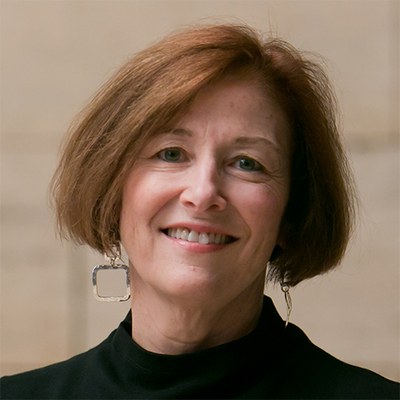
Diane E. Davis
Harvard University
Rethinking Disciplines and Crossing Boundaries: A Speculative Approach for Anticipating Urban Futures
Monday, the 9th of November 2026, 18 o'clock
Jean Beaman
City University of New YorkSuspect Citizenship
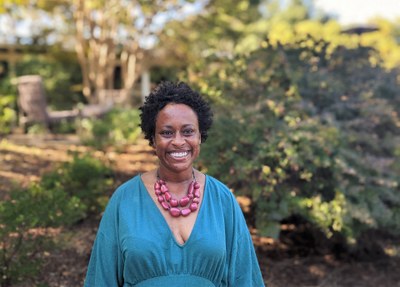
To understand the processes of racialization of descendants of migrants and how they experience racism, I argue we need to contend with the myriad ways racism continues to structure everyday life in the wake of decolonialization. French Republicanism and its universalist model of citizenship provide a context for the inclusion and incorporation of descendants of migrants, yet descendants of migrants – particularly those attached to France’s colonial and imperial history – are denied this inclusion due to their ethnoracial assignment. My framework of suspect citizenship is a generative way to understand this tension between full legal inclusion on the one hand, and permanent exclusion and subordinated status on the other hand. I identity how ethnoracial minorities are marked as suspicious, thereby locating them on the margins of mainstream society and rendering their full societal inclusion and incorporation as impossible. Ultimately, I argue that is not one’s legal citizenship status that marks boundaries of inclusion and belonging, but rather one’s permanent construction as suspect.
Monday, the 16th of November 2026, 18 o'clock
Anthony Miro Born
Universität Stuttgart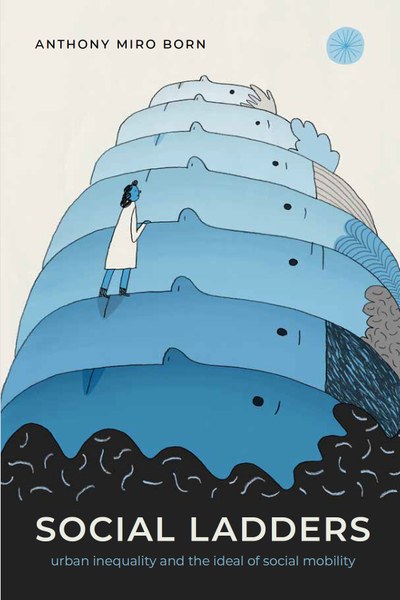
Anthony Miro Born will launch his new book, Social Ladders (Oxford University Press, 2026), which offers a new understanding of a core ideal in political, public and academic discourse on low-income neighbourhoods: that of promoting upward mobility. The book explores the contradictions between the lofty promises of social mobility in marginalised areas, its ambivalent politics and its complex manifestations in people’s lived experiences. The analysis put forward in this book invites readers to fundamentally question upward mobility as an effective strategy for enhancing social justice in marginalised neighbourhoods.
Drawing on international case studies as well as in-depth fieldwork in Germany, the book depicts the ideal of social mobility from multiple perspectives. Social Ladders, then, is not only an account of how the language of social mobility is used and abused as a way of ignoring the primary needs and problems of disadvantaged communities. It also argues that, in order to understand its divisive nature and hidden costs, we need to hear from more than just the few who have ‘made it’ up the ladder to social and economic success. We must also include the voices of those commonly seen as having been ‘left behind’.
Monday, the 23rd of November 2026, 18 o'clock
Oksana Zaporozhets, Fenna Hoefsloot & Valeria Lazarenko
Humboldt-Universität zu Berlin, Durham University
Urban Futures in Times of Disruption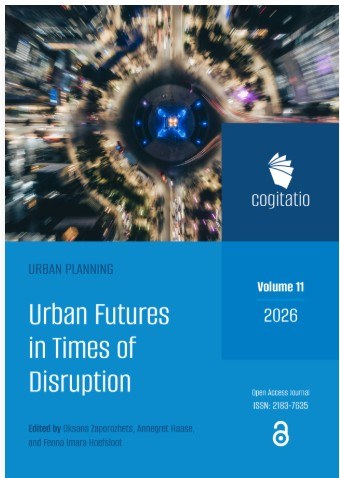 What does it take to imagine and make a hopeful urban future amid overlapping, mutually reinforcing crises? Moving beyond widespread negative scenarios may require a different vocabulary. Drawing on the recently published thematic issue Urban Futures in Times of Disruption, this talk turns to disruption as an epistemic and political tool, one that destabilises established thought patterns and opens space to think and act otherwise. Disruption makes it possible to grasp the ambivalence and unevenness of change, shifts in agency and power relations, and to ask what becomes possible, and for whom. The talk focuses on disruption's productive consequences: elevating marginalised voices, expanding what counts as legitimate knowledge, and generating new collectivities. We avoid romanticising disruption: the suffering, loss, displacement, and inequality it causes remain firmly in view. Particular attention is given to hope as a way of making futures differently.
Monday, the 30th of November 2026, 18 o'clock
Mathias Ericson
University of Gothenburg
Out in the wild: Firefighters, urban-rural divides and wildfires in Sweden
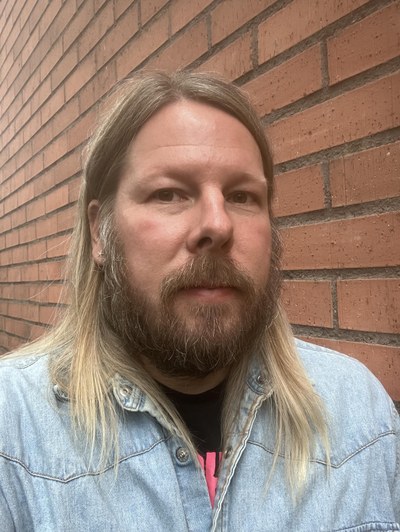
In the dry summer of 2018, wildfires spread across Sweden, mobilizing rescue services, police, military personnel, landowners, politicians, and volunteers. This presentation examines the power relations that shaped this response, focusing particularly on the urban–rural divide. Drawing on feminist theories of protection, I ask how practices of protection can also produce relations of power. To protect is not only to provide safety, but also to expect the protected to be submissive and grateful. If the protected do not submit, they may easily be regarded as a threat, not least to themselves. I explore these dynamics through ethnographic material from a command centre established during the wildfires.
Seventy percent of Sweden’s area is forest, while merely 3% consists of populated areas. The populated areas are concentrated in the south, while the wooded areas are largely in the middle and north. Wildfires primarily affect rural areas in central and northern Sweden, while the professionals coordinating the response travelled there from the three main cities in southern Sweden. In 2018, their arrival in rural space was met with gratitude and hope, and the command centre became a symbol of collective mobilization. At the same time, local firefighters were excluded from the operation, and the rural population had no access to the command centre. When complaints about this were raised, the response was resistant, as they were experienced as disrupting the positive atmosphere of a society coming together in response to a crisis.
Described by some participants as “the first total defence exercise”, the 2018 wildfires offer an opportunity to ask how urban–rural relations are negotiated when rural places become sites of crisis and protection is increasingly organized through processes of militarization.
Monday, the 7th of December 2026, 18 o'clock
Loretta Lees
Boston University, In cooperation with IRS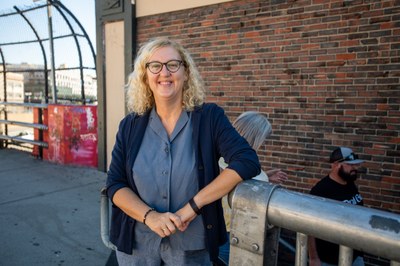

Monday, the 14th of December 2026, 18 o'clock
Evandro Cruz Silva
State University of CampinasThe Precarity of Invisibility: Child Labor and the Classificatory Architecture of Brazil's Urban Peripheries
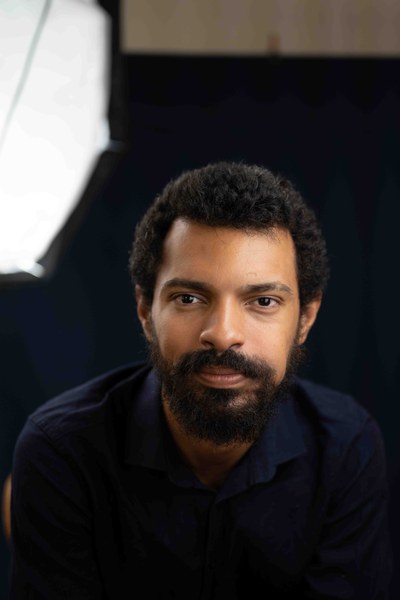
Official statistics tell a success story: between 1992 and 2015, child labor in Brazil fell by 68%. In urban peripheries, however, children earning money remain part of everyday life. In this talk, I argue that this mismatch is not a technical gap but the product of a classificatory architecture, built through ILO conventions and Brazilian labor law, that registers some forms of work and systematically overlooks others. Drawing on ethnographic fieldwork since 2024 in a neighborhood of Santos, wedged between a highway and Latin America's largest port, I follow children's trajectories as they move across informal, criminal, domestic, and formal circuits of earning a living. Depending on where they work, the same children may be counted as workers, treated as offenders, or not seen at all. Invisibility, I argue, is itself a form of precarity: these children are exploited under the labor regime yet excluded from the frames that would recognize them as deserving protection.
Monday, the 4th of January 2027, 18 o'clock
Des Fitzgerald
University College Cork
Nature against the city: counter-urbanism and ecological crisis
 In this talk. I will try to connect a series of interlinked topics that I've been thinking about for some time: first is the idea that there is something psychologically problematic about urban life, that the physical and social texture of the city is, increasingly, an affective challenge in need of some kind of remediation -for example through nature therapy; second is the relationship of this idea to questions of the natural environment more generally, and to a sense that, in an age of climate catastrophe, and environmental degradation there is a growing need to green or to naturalize the kinds of spaces that humans live and work in; third is a growing interest in ecological and urban questions among the European far right, and the sense that the city, symbolic of the social and moral ruination of capitalist modernity, is in need of a firm ecological fix, whether through a return to smaller-scale, and more 'traditional' urban structures. Across these topics, I will argue that, in an age of counter-modern ecofascism, and against a longstanding tradition of seeing urban ecology as a kind always entangled nature-culture, urban scholars may need to start taking the question of an antagonism between the symbolic poles of 'nature' and 'the city' seriously again - and, thereof, to make an explicitly political decision about which side they stand on.
Monday, the 11th of January 2027, 18 o'clock
Mert Pekşen
Universität Osnabrück
Epistemic justice on the ground: Community documentation of right-wing and racist violence in Germany
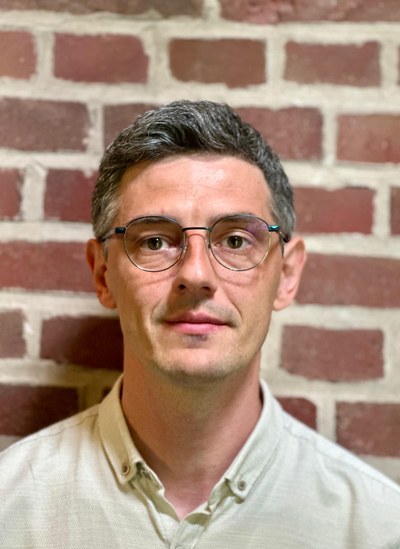
Violent incidents targeting migrants and minorities are steadily increasing across Germany, yet official statistics severely underreport this reality. To challenge dominant narratives, (urban) solidarity initiatives and civil society organizations actively document instances of right-wing and racist violence on the ground, constructing a critical, alternative map of extremist presence. Drawing on qualitative research conducted across Germany in 2023 and 2024, this talk examines the practices and political strategies of these civil society actors. It reveals the complex negotiations inherent in defining, categorizing, and making such violence visible. Ultimately, the documentation practice functions as a crucial, bottom-up mechanism that not only generates evidence for accountability and strives for epistemic justice but also actively strengthens urban solidarity committed to building more inclusive political landscapes.
Monday, the 18th of January 2027, 18 o'clock
Ilker Ataç
Hochschule Fulda
Strategic Hybridity: Service Provision and Political Claim-Making as Mutually Constitutive
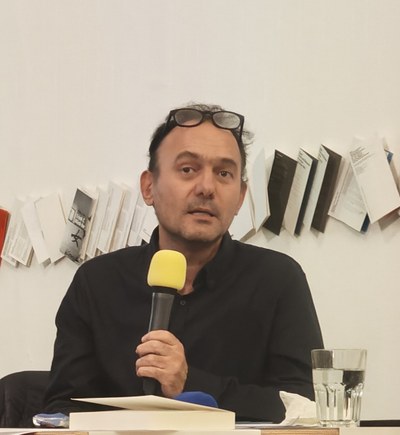 Although migrants with precarious residence status in Germany are formally entitled to healthcare, they are routinely excluded from it by social law, migration control, and administrative practice. Since the mid-2010s, clearing centers have emerged as civil society organizations that seek to route uninsured people into the regular health system rather than consolidate a parallel one. Drawing on interviews and ethnographic engagement, this paper asks how these organizations combine service provision with political advocacy as they become institutionalized. I develop the concept of strategic hybridity to show that everyday casework and transformative claim-making are not competing orientations but mutually constitutive. Casework generates the situated knowledge that makes structural claims specific and legitimate, while the pursuit of legal change and local co-production prevents service provision from becoming into a self-sustaining parallel sector. The paper specifies the conditions under which institutionalization sustains rather than dissolves this simultaneity.
Monday, the 25th of January 2027, 18 o'clock
Cansu Civelek
Middle East Technical University
The City Not Yet: Why Urban Futures Require Utopian Fiction
TBA
Monday, the 8th of February 2027, 18 o'clock
Christoph Brumann
Max Planck Institute for Social AnthropologyProducing global Japanese starchitecture in a global Japanese office: Anthropological observations
TBA